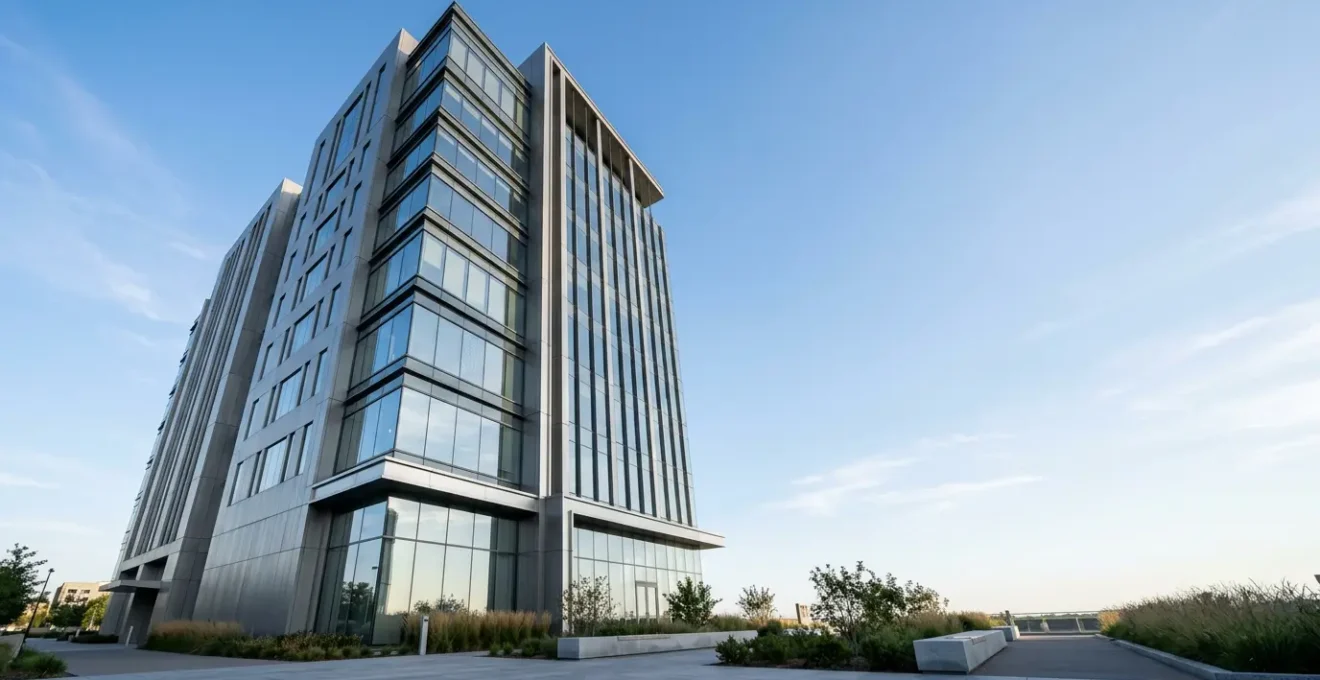
The fastest path to increasing commercial property value isn’t market timing; it’s the methodical enhancement of Net Operating Income (NOI).
- Every dollar added to NOI can increase property value by $15-$25, a concept known as the valuation multiplier effect.
- This is achieved through a combination of maximizing ancillary revenue, strategically restructuring leases, and implementing disciplined cost controls.
Recommendation: Shift focus from chasing top-line revenue to optimizing every line item that impacts the bottom-line profitability of your asset.
For active commercial real estate investors, relying on market cycles for appreciation is a passive and unpredictable strategy. The real power lies in “forcing appreciation”—actively improving the asset’s financial performance to directly increase its market value. The central nervous system of this process is the Net Operating Income (NOI), calculated as all revenue generated by the property minus all reasonably necessary operating expenses. While many focus on the obvious levers of raising rent and cutting costs, this approach is often too blunt.
The most sophisticated asset managers understand that NOI optimization is a game of operational leverage. They don’t just cut expenses; they prevent future costs through smart maintenance. They don’t just increase base rent; they create new, high-margin ancillary income streams. This granular focus recognizes a fundamental truth of commercial real estate valuation: every single dollar of NOI gained is magnified many times over in the property’s final sale price, thanks to the power of the capitalization rate.
This guide moves beyond the generic advice. It provides a strategic framework for surgically boosting your NOI, viewing your property not just as a building, but as a dynamic business. We will dissect specific, high-impact strategies that directly influence your bottom line and, consequently, your asset’s valuation.
This article provides a structured roadmap for investors. Below is a summary of the key strategies we will explore to enhance your property’s performance and valuation.
Summary: A Strategic Guide to Boosting Commercial Property NOI and Value
- Why high service charges scare away premium tenants?
- How to monetize parking or signage to boost income?
- Lease Re-gear: How to trade rent-free periods for longer terms?
- The deferred maintenance error that kills long-term NOI
- When to increase rent: analyzing local comparables correctly
- Gross or EBITDA: Which margin tells you if your pricing is wrong?
- How to reduce office energy bills given the current UK rates?
- Why Focusing on EBITDA Matters More Than Revenue for UK Business Exits?
Why High Service Charges Scare Away Premium Tenants?
While maximizing income is the goal, inflated or poorly managed service charges (also known as Common Area Maintenance or CAM charges) can be a significant deterrent for high-quality tenants. Premium tenants are sophisticated; they scrutinize total occupancy costs, not just base rent. Unusually high service charges signal either inefficient management or an attempt to turn a cost center into a profit center, both of which are red flags. This can lead to longer vacancy periods and a tenant roster that is less financially stable.
The goal of service charges should be full recovery of legitimate costs, not profit generation. Transparent and efficient management of these charges builds trust and strengthens landlord-tenant relationships. Property management fees, a key component, can vary widely; standard commercial property management fees often range from 4% to 12% of gross monthly rent, and any service charge structure that seems to exceed fair operational costs will be questioned. An efficiently run building with fair, transparent charges is a powerful marketing tool for attracting and retaining the best tenants.
As Jake Bade, Head of Commercial Mortgage Lending at Chase, points out, the benefits of diligent oversight extend directly to the bottom line and asset stability.
Proper management of CAM charges leads to more consistent and predictable cash flow, plus improved operating efficiency and a better relationship with tenants.
– Jake Bade, Head of Commercial Mortgage Lending at Chase
Ultimately, a reputation for fair service charges can reduce tenant turnover, lower marketing expenses, and create a more stable income stream, all of which positively impact NOI. The slight margin lost by not padding CAM is more than compensated for by the value of a fully leased building with strong tenants.
How to Monetize Parking or Signage to Boost Income?
Beyond base rent, a property’s ancillary assets—parking lots, building facades, and common areas—are often underutilized sources of significant income. Implementing a strategic monetization plan for these assets can create high-margin revenue streams that flow directly to the NOI with minimal associated costs. Parking, in particular, represents a substantial opportunity. Instead of viewing it as a simple amenity, consider it a dynamic revenue-generating asset.
For example, implementing paid parking for non-tenants, offering reserved premium spots, or partnering with parking apps can unlock new income. The financial impact of this is far from trivial; one $50,000 annual increase in parking revenue can boost property value by over $600,000, demonstrating the powerful valuation multiplier at play. Similarly, building exteriors and high-traffic interior spaces offer opportunities for digital signage or traditional billboard advertising, creating another direct injection of cash into the NOI.
Modern technology makes this easier than ever. Smart parking systems, as seen in major commercial operations, leverage automation for efficiency and enhanced user experience.
As the image above suggests, the integration of technology like digital sensors is key to modernizing these assets. In the United States, commercial operators like Brookfield Properties are using app-based parking systems for seamless payments, while Westfield London has adopted license plate recognition to provide frictionless entry and exit. These examples show a clear trend: treating ancillary spaces as value-added services enhances both customer experience and revenue growth.
Lease Re-gear: How to Trade Rent-Free Periods for Longer Terms?
A lease re-gear is a strategic negotiation with an existing tenant to modify the terms of their current lease, typically well before it expires. One of the most powerful tools in a re-gear is the trade-off between a rent-free period and a longer lease term or other landlord benefits. While giving away free rent seems counterintuitive to boosting NOI, it can be a highly effective strategy to secure long-term income stability and enhance asset value.
Offering a rent-free period in exchange for the tenant removing a break clause or extending their lease term is a classic win-win. The landlord secures a tenant for a longer period, reducing future vacancy risk and leasing costs. This increased lease length (often referred to as WAULT – Weighted Average Unexpired Lease Term) is a key metric for property valuation. A longer, more secure income stream is more valuable to potential buyers than a slightly higher rent with near-term expiry risk. This is why many landlords offer free rent in lieu of negotiating down monthly payments, as lower monthly rent directly devalues the property.
Furthermore, rent-free periods can be used to finance property improvements that add lasting value, benefiting both the current tenant and future re-letting prospects.
Case Study: Funding Property Upgrades with a Rent-Free Period
A tenant in a warehouse lease was initially offered a three-month rent-free period. During negotiations, the tenant expressed a desire to install expensive LED lighting but lacked the budget. Recognizing that this upgrade would improve the building’s Energy Performance Certificate (EPC) rating and overall value, the landlord offered to extend the rent-free period to nine months. This extension effectively funded the tenant’s capital-free upgrade, while the landlord secured a permanent, value-enhancing improvement to their asset.
This approach transforms a concession into a strategic investment. The temporary dip in cash flow from the rent-free period is more than offset by the long-term security and the capital improvement added to the property, both of which drive up its overall valuation.
The Deferred Maintenance Error That Kills Long-Term NOI
One of the most destructive yet common errors in property management is deferring maintenance to boost short-term NOI. While cutting the maintenance budget provides an immediate, visible lift to the bottom line, it is a shortsighted strategy that creates a rapidly accumulating “maintenance debt.” This debt grows exponentially, as minor issues left unaddressed evolve into major system failures that require costly emergency repairs and capital-intensive replacements.
The financial multiplier effect of this neglect is severe. Industry analysis from Pacific Partners Consulting Group reveals that for every $1 deferred in maintenance, an owner can expect to pay $4 in future capital renewal costs, with that figure escalating dramatically for complex systems. This doesn’t even account for the indirect costs: tenant dissatisfaction, potential safety hazards, and emergency downtime, all of which can damage a property’s reputation and lead to vacancies.
A proactive, preventive maintenance program is not an expense; it is an investment in preserving the asset’s value and ensuring the stability of its income stream. A well-maintained building operates more efficiently, has happier tenants, and avoids the catastrophic budget shocks of unexpected failures. This approach protects long-term NOI from the erosion caused by escalating repair costs.
Focusing on preventive care, as illustrated by a technician inspecting an HVAC system, is the cornerstone of sound asset management. Every dollar of NOI lost due to unforeseen repairs or higher operating costs from inefficient equipment directly reduces the property’s value at disposition. The logic is inescapable: consistent, planned maintenance is fundamentally cheaper than reactive, emergency repair.
When to Increase Rent: Analyzing Local Comparables Correctly
Increasing rent is the most direct way to boost revenue, but it must be executed with precision and justification. A rent increase that is too aggressive or arbitrary can lead to tenant disputes, vacancies, and a negative reputation in the market. The key to a successful and defensible rent increase is a rigorous analysis of local market comparables (“comps”). This data-driven approach removes emotion and guesswork, grounding your decision in market reality.
A proper comparable analysis goes far beyond simply looking at the asking price of the building next door. It requires a granular comparison across several key factors. The goal is to compare “apples to apples” to determine your property’s true market position. With national trends showing office space rates rising, such as the February 2025 data showing office space averaging $33.41 per square foot, a 5.7% annual increase, it is tempting to apply broad strokes. However, local nuances are what truly matter.
A detailed analysis must account for several variables that influence a property’s rental value. These include, but are not limited to:
- Building Classification: Class A buildings with premium amenities and locations will always command higher rates than functional but older Class B or C properties.
- Location Premiums: A location in a Central Business District (CBD) carries a different value proposition than a suburban office park or a property in an up-and-coming neighborhood.
- Lease Structure: Rents must be compared on a like-for-like basis. A Triple Net (NNN) lease, where the tenant pays for taxes, insurance, and maintenance, cannot be directly compared to a Full-Service Gross (FSG) lease that includes all costs.
- Market Conditions: In a “tenant’s market” with high vacancy, landlords may offer significant concessions like rent abatement, which must be factored into the true effective rent. In a “landlord’s market,” these concessions are minimal.
Your 5-Point Checklist for a Defensible Rent Increase Analysis
- Points of contact: List all truly comparable properties in your submarket, filtering by building class, size, and tenant profile.
- Collecte: Inventory their current asking rents, stated lease structures (e.g., NNN, FSG), and any publicly advertised concessions like rent-free periods.
- Cohérence: Confront this data with your property’s specific features. Adjust for differences in amenities, building age, parking ratios, and accessibility.
- Mémorabilité/émotion: Assess current market sentiment and vacancy rates. Is it a landlord’s market (justifying a stronger increase) or a tenant’s market (requiring a more conservative approach)?
- Plan d’intégration: Set a new target rent based on your adjusted comparable data and prepare a clear justification to present to tenants during renewal negotiations.
Gross or EBITDA: Which Margin Tells You if Your Pricing Is Wrong?
As an asset manager, you’re inundated with metrics. But when it comes to diagnosing the health of your property’s pricing strategy, not all margins are created equal. Gross margin and EBITDA (or its real estate equivalent, NOI) serve distinct but complementary diagnostic roles. Understanding which one to use, and when, is key to pinpointing operational weaknesses and opportunities.
Gross margin is an income stream diagnostic tool. It isolates the profitability of a specific revenue source before general operating costs. For example, calculating the gross margin on your parking revenue (parking income minus direct parking expenses) tells you if your pricing for that specific service is profitable. If the margin is low or negative, your pricing for that ancillary service is wrong. It’s a micro-level indicator for individual pricing decisions.
In contrast, EBITDA/NOI is a holistic measure of operational health. It reflects the property’s total operational efficiency and true cash flow after all operating expenses are paid. While a strong NOI margin is generally in the 40-60% range for commercial properties, a low NOI margin doesn’t just mean your pricing is wrong—it could also signal bloated operating costs. Two buildings with identical revenue can have vastly different NOI margins if one has a much higher expense structure, indicating it is less efficient and more vulnerable to market downturns.
The relationship between these metrics is what reveals the full picture. A property might have healthy gross margins on all its individual services but still suffer from a poor overall NOI margin due to excessive, unallocated overhead. This dynamic is best understood by comparing their roles.
| Metric | Primary Function | Use Case | What It Reveals |
|---|---|---|---|
| Gross Margin | Income stream diagnostic | Evaluating specific revenue sources (e.g., parking profitability) | Whether individual pricing for services or amenities is profitable before operating costs |
| EBITDA / NOI | Holistic operational health measure | Overall asset performance and core valuation | Total property operational efficiency and true cash flow after all operating expenses |
| Operational Leverage Effect | Amplification mechanism | Cost management and pricing optimization | How small pricing or cost improvements create disproportionately large NOI gains due to fixed operating costs |
| Expense Structure Analysis | Risk assessment | Comparing properties with identical revenue | Properties with higher operating expenses show lower EBITDA margins, indicating weaker pricing relative to costs and higher vulnerability |
How to Reduce Office Energy Bills Given the Current UK Rates?
In the United Kingdom’s current high-cost energy environment, utility bills have transitioned from a standard operating expense to a major threat to commercial property NOI. With recent data showing energy costs having increased nearly 30% since 2020, proactive energy management is no longer optional—it’s a critical component of asset performance. Reducing consumption provides a direct and recurring boost to the bottom line.
The most effective strategies go beyond simple measures like switching to LED lighting. Modern energy reduction focuses on intelligent systems and innovative financial models that minimize upfront capital expenditure (CapEx). The goal is to make buildings smarter, not just more frugal. A comprehensive approach involves auditing systems, leveraging new service models, and engaging tenants in the efficiency effort.
For UK commercial properties, several high-impact strategies are particularly relevant:
- Smart Building Audits and AI: The first step is a thorough audit focused on the highest consumer: the HVAC system. Implementing an AI-powered Building Management System (BMS) allows for dynamic adjustments based on real-time occupancy data. In an era of hybrid work, heating or cooling empty floors based on a fixed schedule is a direct drain on NOI.
- Energy as a Service (EaaS): To overcome the CapEx barrier of major upgrades, EaaS contracts are a powerful tool. A third-party provider installs and maintains new, efficient equipment (like solar panels or modern HVAC) at no upfront cost. They are then paid a share of the resulting energy savings over a set period, aligning their incentives with the landlord’s.
- Tenant Engagement and Sub-metering: You cannot manage what you do not measure. Installing sub-meters for individual tenants or floors provides granular data on consumption. This data can be used to implement “green lease” clauses that incentivize reduction, or even to create programs that reward the most energy-efficient tenants, fostering a culture of conservation.
- Proactive System Upgrades: Finally, aging systems must be addressed. Inefficient HVAC, poor insulation, and outdated lighting create a constant drag on utility budgets, slowly but surely eroding NOI month after month.
Key Takeaways
- NOI is the engine of valuation; every dollar of NOI gain is multiplied in the property’s final value.
- Forced appreciation is an active strategy combining ancillary income generation, smart cost control, and strategic lease management.
- Proactive maintenance is an investment, not an expense, preventing the exponential costs of deferred repairs that destroy long-term value.
Why Focusing on EBITDA Matters More Than Revenue for UK Business Exits?
In the context of selling a commercial property in the UK, the single most important metric is not gross revenue; it is Net Operating Income (NOI), the real estate equivalent of EBITDA. Potential buyers and their lenders are not purchasing a revenue figure; they are purchasing a cash flow stream. NOI represents this core profitability, and it is the foundational number upon which the entire property valuation is built.
The fundamental principle of commercial real estate valuation is that property value is a direct function of NOI divided by the market capitalization rate (cap rate). This mathematical relationship means that any increase in NOI has a disproportionately large impact on the final sale price. Growing revenue by 10% is meaningless if operating expenses grow by 12% in the process, as this would actually decrease NOI and, therefore, the property’s value. This is the valuation multiplier effect in action.
This principle is not theoretical. Consider the direct financial impact in the UK market.
With typical UK commercial property cap rates hovering between 4% and 6%, even a modest £10,000 annual increase in NOI can translate to an astonishing £166,000 to £250,000 in additional property value at the point of sale. This demonstrates that every pound of profit optimization is worth 16 to 25 times its annual value upon exit. This is why a strategic focus on the operational levers that control NOI—cost efficiencies, ancillary income, and smart lease structures—yields a far greater return than simply chasing top-line rental growth.
Therefore, every strategic decision, from maintenance schedules to lease negotiations, should be viewed through the lens of its ultimate impact on NOI. This bottom-line focus is the most reliable path to maximizing your return on investment when it’s time to sell.